
The Irish Traditional Music Archive (ITMA) is committed to providing free, universal access to the rich cultural tradition of Irish music, song and dance. If you’re able, we’d love for you to consider a donation. Any level of support will help us preserve and grow this tradition for future generations.
A chairde,
Is ar scáth a chéile a mhaireann na daoine.
As we come to the close of 2025, I want to reflect with you on a year of steady, purposeful work at the Irish Traditional Music Archive. Work shaped by care, collaboration, and a deep sense of public responsibility.
ITMA exists to serve Irish traditional music, song, and dance as they are lived, practised, remembered, and reimagined. The tradition does not stand still, and neither can we. New recordings, new tunes, new voices, new interpretations, and new archival source material come into being every day. To serve that reality, ITMA must remain a living archive in active relationship with a living tradition, rooted in the past, alert in the present, and open to the future.
At the heart of our artistic work is a simple but proven philosophy: connect artists with archival material and let that encounter do its work. When tradition-bearers, performers, and makers engage directly with source recordings, manuscripts, photographs, and fieldwork, the archive becomes audible, visible, and human. The public comes to understand, often for the first time, that this is not a remote or specialist resource, but their archive. Artists, in turn, become our most effective ambassadors, carrying archival knowledge into concerts, classrooms, broadcasts, and new creative contexts – all of which lead audiences back to the source.
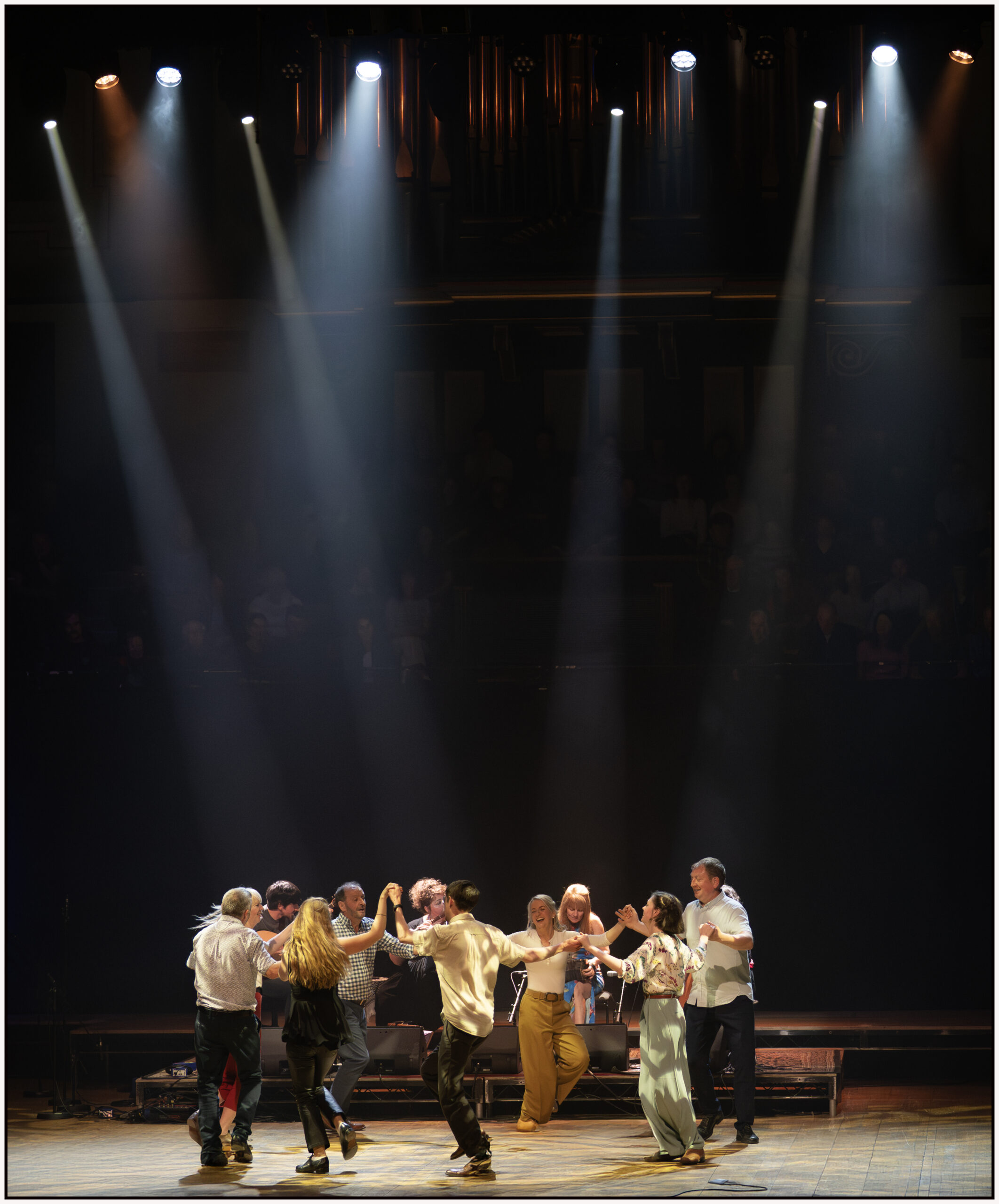
This philosophy underpins the Drawing from the Well tour, concerts, online content, broadcasts, and partnerships that together make ITMA visible not only as a repository of the past, but as a confident public institution serving present and future generations. In 2025, our two Drawing from the Well concerts in the National Concert Hall both sold out, generating vital income for ITMA. Meanwhile, our Drawing from the Well tour expanded nationally and internationally, including a new London date in partnership with the London Irish Centre.
Alongside this public-facing work sits another responsibility that is quieter, but no less urgent: the work of collecting and preserving what can so easily be lost.
We collect physical archival materials that are unique, fragile, and at risk. Just as critically, we work to collect what exists only in people, in memory, in lived experience, in musical judgement, in movement, in style, and in story. An archive can live in a mind, a body, or a lifetime of practice. If that knowledge is not documented, interviewed, recorded, or shared, it can be lost irrevocably.
This is why field recording, oral history, and documentation remain central to ITMA’s mission across instrumental music, song, and dance. In 2025, this work continued with care and urgency, ensuring that the living knowledge of tradition bearers is preserved alongside physical collections.
Dance is integral to this picture. This year we were privileged to host Jean Butler and facilitate the Our Steps collecting project, supporting the documentation of Irish dance as embodied cultural knowledge. We continued to enable dance collecting led by Edwina Guckian and Caitlín Nic Gabhann, and to work with Michael Tubridy, Helen Brennan, and others whose scholarship and commitment have shaped the field over decades. We also continued to facilitate access for international researchers to the John Cullinane Dance Archive, the most comprehensive archive of its kind anywhere in the world.
These dance collections sit alongside instrumental and song collections of comparable depth and regional specificity. The Caoimhín Mac Aoidh Collection, with its strong Donegal focus and deep connections to Sliabh Luachra, and the Vincent Broderick materials in ITMA are just two examples of how local musical worlds, when carefully collected and described, take their place within a national and international archive. This balance, between the intensely local and the globally accessible, remains one of ITMA’s defining strengths.

ITMA’s work is guided by three core processes: we collect and preserve, we organise and describe, and we present and publish. Preservation alone is not enough. Material must be catalogued, contextualised, and connected to international standards if it is to be discoverable, usable, and meaningful. This meticulous, skilled labour is often invisible, but it underpins everything else we do. From there comes presentation and publication; in our reading rooms at 73 Merrion Square, through concerts, talks, exhibitions, and residencies, and increasingly through digital platforms that allow anyone, anywhere, at any time to engage with the archive.
A second core philosophy underpins this work: ITMA is committed to the highest international standards of digital preservation, and to making as much material as possible digitally accessible over the coming years and decade. Like many small archives working in a fast-moving technological world, this stretches our resources. But we are meeting this challenge well. What gives us confidence is that progress is tangible, measured, and delivered year on year.
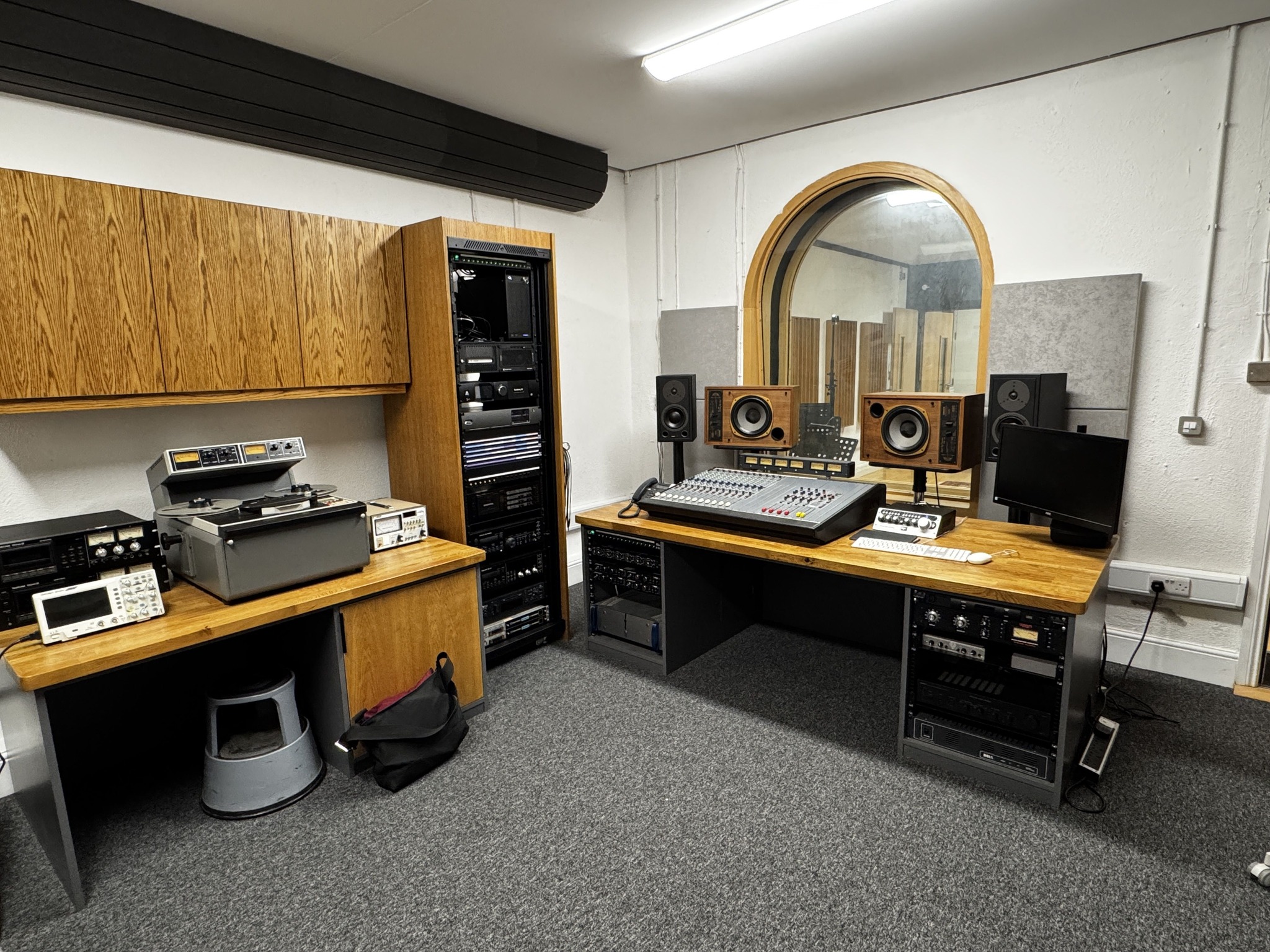
A key part of that progress in 2025 was the development of ITMA’s digitisation capacity. With support from the Shared Island Unit, ITMA’s philanthropic supporters, and the Heritage Council, we have built what we believe is the most advanced audio digitisation studio in Ireland for the transfer of analogue sound recordings. We are also satisfied with the audio-visual digitisation capacity we have now put in place. The public is already benefiting from a standard of audio transfer that simply was not possible for us previously, with outstanding transfers now being produced daily from reel-to-reel tapes, cassettes, and other legacy formats.
There are also tangible results you can point to. ITMA’s poster collection, comprising 4,251 items, is now fully digitised thanks to targeted philanthropic support. What was once accessible only on site can now be explored digitally, opening a rich visual history of performance, promotion, and community life to researchers, musicians, students, and the wider public. This is preservation work completed and made public-facing, and it stands as a clear example of how focused support can unlock whole collections for everyone.
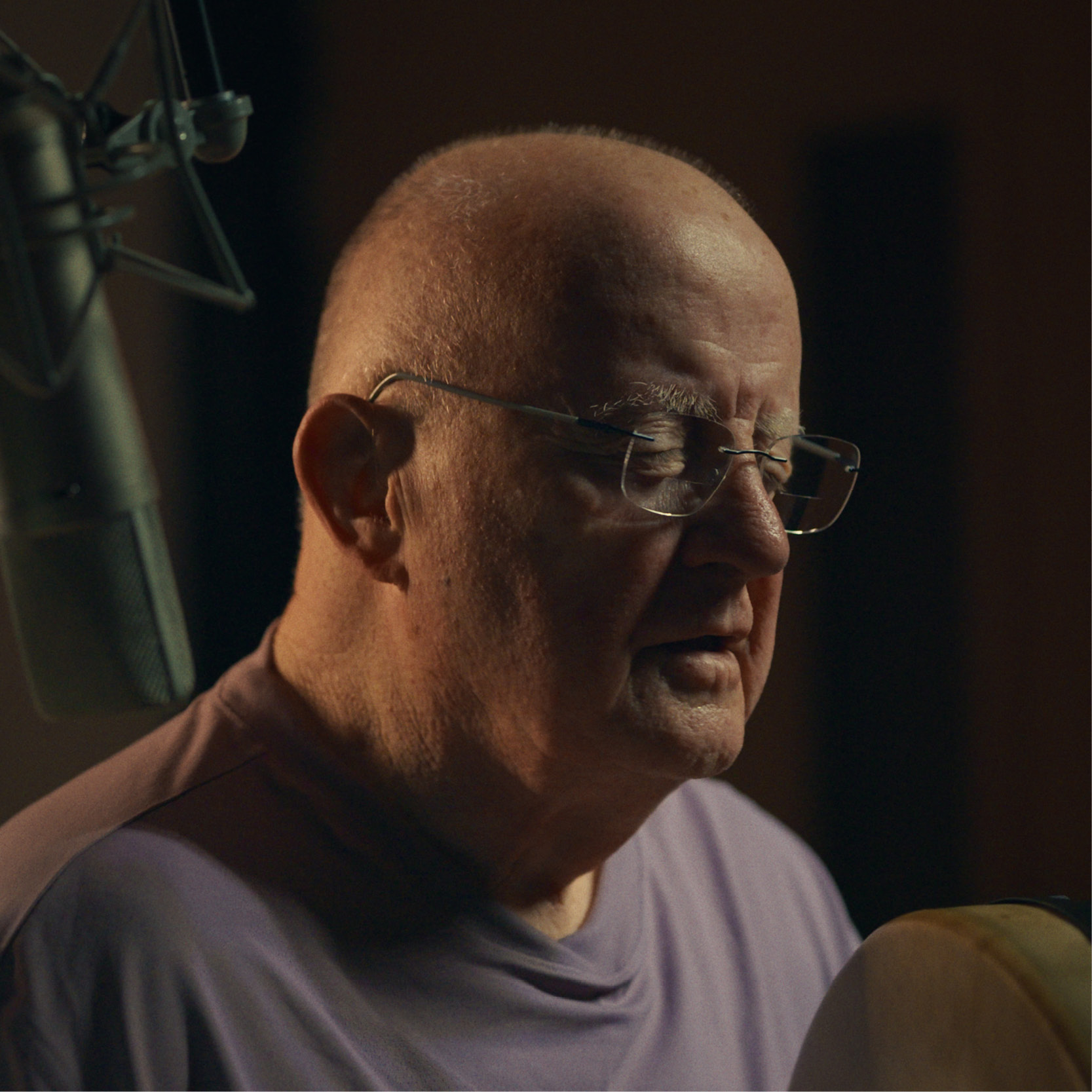
2025 also demonstrated how archival work can reach far beyond our walls. Brendan Gleeson’s Farewell to Hughes’s achieved international recognition, including award nominations and broadcast agreements, and reached audiences through TG4, Sky, Aer Lingus transatlantic flights, and international markets. As we close the year, Cartlann Christy Moore will be broadcast on TG4 on New Year’s Eve, a fitting moment to reflect on how invisible archival labour becomes shared national cultural memory. Looking ahead, TG4 will also broadcast ITMA’s Shared Island flute work as a dedicated television documentary in 2026, extending that work to a wide public audience.
Song and dance, music and movement, local tradition, and global reach were also central to our Shared Island work this year. ITMA hosted a six-day Shared Island Flute Residency, bringing together artists and audiences from across the island to explore diverse flute traditions through concerts, talks, and workshops. This work places culture where it belongs – at the centre of understanding, dignity, and shared life.
A particularly meaningful publication milestone in 2025 was the completion of Tommie Potts: The Sorrowful and the Great, part of ITMA’s commitment to democratising access to the tradition through rigorous, readable scholarship. We are deeply grateful to Seán Potts, an insider to the tradition and an experienced biographer, who immersed himself in researching his grand-uncle and produced what The Irish Times described as a “long-overdue exploration of Potts, the man and the musician.” Alongside this, Aoife Ní Bhriain undertook the careful transcription of Tommie Potts’s music in a sister publication, ensuring that his repertoire is not only remembered but playable, teachable, and alive. I want to acknowledge with thanks the editorial care and generosity of Aoife Nic Cormaic of RTÉ and Professor Kevin Whelan of the University of Notre Dame, whose insight and guidance strengthened both publications.
Our audiences are local, national, and international, and our partnerships reflect that. In 2025, ITMA deepened relationships in London, Paris, and New York, working closely with partners such as the Centre Culturel Irlandais, the London Irish Centre, and the Irish Arts Center, and continuing collaboration with broadcasters and funders including TG4, RTÉ (The Rolling Wave), Culture Ireland, the Heritage Council, DFAT, and the Shared Island Unit. Academic partnerships and internships with institutions such as UCD, Dundalk Institute of Technology, the University of Notre Dame, and Boston College helped build future capacity and shared expertise.
Much of what ITMA delivered in 2025 was made possible through strategic philanthropy and public generosity. Support enabled tangible improvements across digitisation, digital services, tune resources, and access initiatives, including the appointment of Liam O’Brien, a Miltown Malbay native, as ITMA’s Clare Digital Access and Development Officer. This role strengthens local stewardship while expanding national and international access. We are deeply grateful to those donors who prefer to remain anonymous, and to those whose targeted support has helped remove bottlenecks in digitisation, description, rights, and web delivery, the practical interventions that turn collections into public resources.
This brings me to a simple but important truth. Whether you gave €5 or €100,000, attended a concert, bought a book from our shop, shared a playlist, or spoke about ITMA to a friend, you helped us do what matters: protect a living tradition and put it within reach of people. Donors large and small, concert-goers, shop customers, volunteers, artists, and partners together enabled ITMA to deliver far beyond what core public funding alone could sustain.
We remain sincerely grateful to the Arts Council of Ireland, our main funder, for their continued support, including the welcome funding increase in 2025. Like many arts organisations, ITMA now faces standstill funding in 2026, at a time of inflation and rising costs. We name this context not in complaint, but in honesty, and in recognition of the shared challenges across the sector.
Looking ahead to 2026, we are also grateful for our relationship with the Office of Public Works, who own ITMA’s building at 73 Merrion Square. In the year ahead, OPW will be working closely with ITMA on the development of a public Christy Moore exhibition space, as well as on the Shared Island artist and archivist-in-residence mews, funded by the Government of Ireland through the Department of Tourism, Culture, Arts, Gaeltacht, Sport and Media. Alongside this, and with the support of DFAT and Culture Ireland, ITMA expects to announce very exciting news in 2026 relating to a major international project that will significantly extend the archive’s public reach. Together, these developments will allow us to serve audiences in new ways that were previously beyond our capacity. Exciting times lie ahead.
As the year turns, I return to a simple belief: the archive is not a vault; it is a bridge. It connects a person in a kitchen to a singer long gone, a young musician to a source recording, a dancer to a step remembered, a community to its own story.
Thank you for your trust, your support, and your belief in this work. ITMA is a public archive, held in stewardship for everyone. We look ahead to 2026 with confidence, gratitude, and resolve.
Go mbeirimid beo ar an gceol sa bhliain nua.
Athbhliain faoi mhaise daoibh go léir.
Liam O’Connor