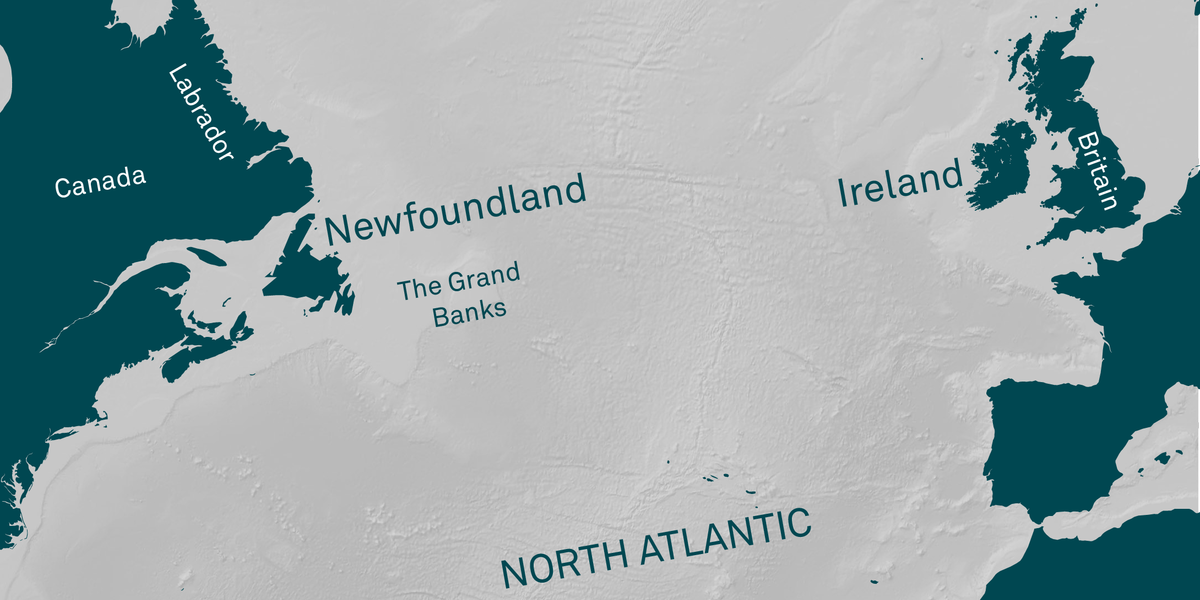
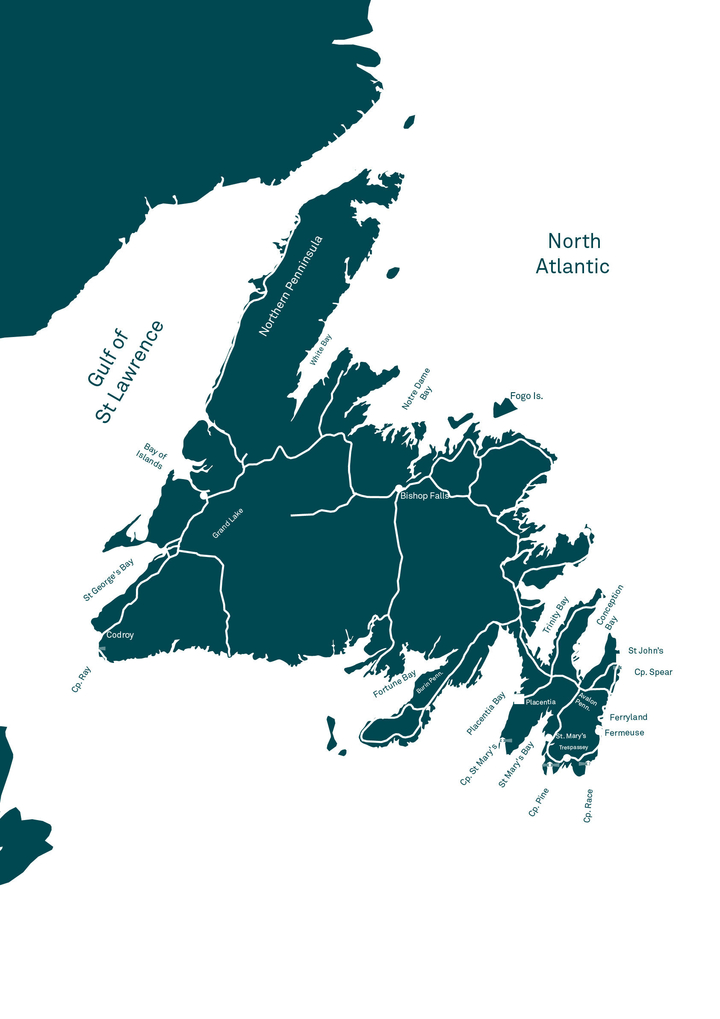
Talamh an éisc. The fishing grounds. Newfoundland. This rocky island sits on the edge of the Grand Banks, the shallow ocean plateau that runs along the northeast edge of North America. It’s the fabled destination of Irish monks, Vikings, and fishermen. And it’s the island portion of Canada’s most easterly province: Newfoundland and Labrador. With a population of 519,716 as of 2016 and a total land mass of 370,514.08 km2, it is among Canada’s most sparsely populated provinces (1.4 people/km2; visit Statistics Canada for more information).
Originally the home of the indigenous Beothuk, Mi’kmaq, and Inuit peoples, since the 15th-century arrival of Genoese explorer, John Cabot, the island has been colonised and contested by Europeans with interests in its rich natural resources. The inhabitants of Newfoundland have tended to cluster along the coastline in groupings known as outports: communities built in the small coves and inlets of the island’s 9,656 km of coastline. Historically, these were spots with the best access to the fisheries and Newfoundland’s limited arable land. Often they were accessible only by boat.
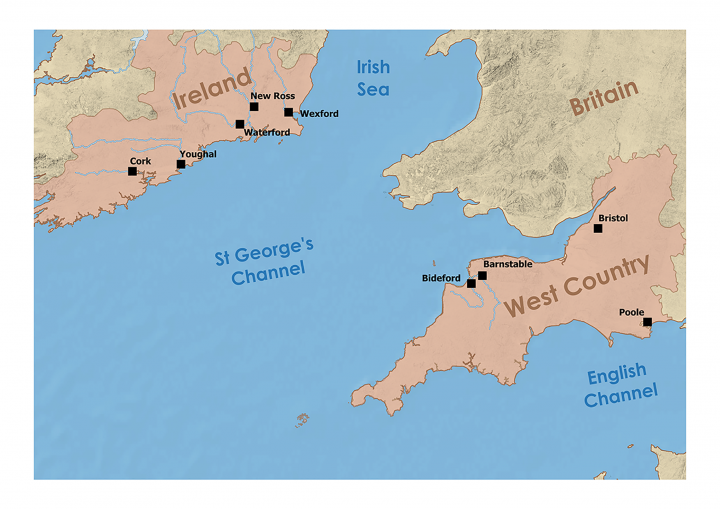
Colonised by a combination of French, English, Scottish, and Irish settlers, shaped by ongoing in- and out-migration, and influenced by still-vital (though decimated) Indigenous cultures, 21st century Newfoundland has a richly varied island culture and provincial identity. But while there is an incredible diversity of influences, traditions, and identities within Newfoundland, a sense of Irishness is embraced by cultural revivalists, the tourism industry, and even policy makers.
In 1996, Premier of Newfoundland Brian Tobin and Irish Taoiseach John Bruton signed a Memorandum of Understanding between Newfoundland and Ireland. The Memorandum recognised the historical connectedness of the two regions, but also formalised ongoing ties between the cultural, education, and business sectors of Newfoundland and Ireland.
Estimates based on the 2016 Census of Canada suggest that only 20.7 per cent of the province’s total population claim Irish descent (see Statistics Canada 2017). And yet, the Irishness of parts of Newfoundland is undeniable. It’s in the accent and dialect, the folkways and oral traditions, the role of the Catholic Church, and the songs, music, and dance. It’s celebrated through festivals, museum exhibitions, iconography, and the sustained circulation of music, song, dance, and other forms of culture.