
The Irish Traditional Music Archive (ITMA) is committed to providing free, universal access to the rich cultural tradition of Irish music, song and dance. If you’re able, we’d love for you to consider a donation. Any level of support will help us preserve and grow this tradition for future generations.
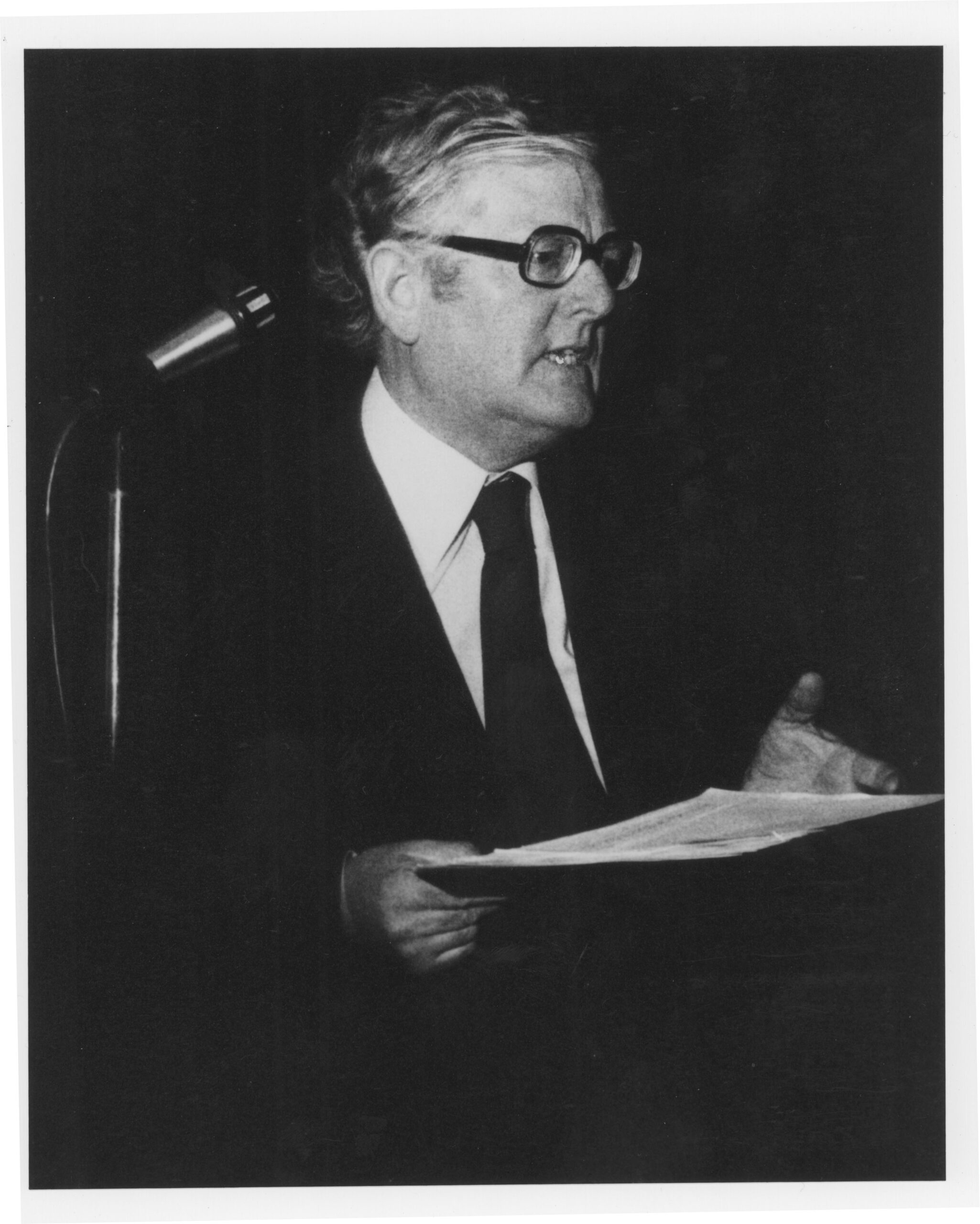
It is just over 40 years since Breandán Breathnach, Irish traditional musician, music collector, editor, publisher, lecturer, mentor, and entrepreneur, died of heart failure while crossing St Stephen’s Green in Dublin at what would now be regarded as the comparatively early age of 73. But the memory of Breandán remains vivid among those who had the privilege of knowing him personally and being involved with him in his numerous music projects. His vision and drive, his learning and humour, and his accomplishments, continue to inspire them. Thousands who never knew him personally now benefit from his lifework in the music; many more will in the future.
The outlines of his biography can be briefly stated. He was a Dubliner, born in the Liberties in 1912 into a family which was involved in the early 1900s in the Gaelic League and the Dublin Pipers’ Club; the Irish language and uilleann piping would be central to his life. After education by the Christian Brothers, he entered the Civil Service in 1930 and rose to the rank of Assistant Principal there, serving in the departments of Posts & Telegraphs, Finance, Agriculture – and finally Education. His social life centred on Irish speakers and traditional musicians from all parts of Ireland who were living in the city. In 1943 he married Lena Donnellan from Mullagh, Co. Clare, a supporter of all his activities; they would have five daughters. For the rest of his life Breandán lived in Blackrock, Co. Dublin, commuting daily to his work (he never learned to drive).
Listing Breandán’s many achievements in Irish traditional music is a larger task. Having learned uilleann piping from an uncle and from John Potts, William Andrews, Leo Rowsome, and others, he began compiling tunes in music manuscript, at first for his own use but eventually for publication. In the 1950s he served for a time as Assistant Secretary of Comhaltas Ceoltóirí Éireann before splitting from the organisation and becoming a trenchant critic of it. In the early 1960s he set up a record company, Spól, with his brother Ciarán. His first music collection, Ceol Rince na hÉireann, based on 21 musicians of his Dublin acquaintance, appeared from the state Irish-language publisher An Gúm in 1963. It was warmly welcomed, especially by the young learners who were being increasingly attracted to the music. In the same year Breandán began publication of Ceol: A Journal of Irish Music which would (irregularly) bring opinion, music, song, and scholarship to the public until his death. In 1965 he effectively abandoned his civil service career, moving from Agriculture to Education to undertake, under the auspices of the state, the collection and publication of all Irish traditional dance music (the newspapers said that he had gone ‘from pigs to jigs’; after his death his daughter Niamh would become Minster for Education, an outcome he would have greatly enjoyed because of his experiences there). Recording now widely throughout the country on tape, he broadened the scope of his second Ceol Rince volume of 1976 to include 81 musicians ranging from Kerry to Donegal; his third volume of 1985 was based on commercial recordings (all three are still in print and in demand). Within Education he also turned to traditional song collection, employing as collectors Seán Corcoran and Tom Munnelly; the latter would go on to assemble the largest collection ever made of Irish traditional song in the English language. In 1971 Breandán was one of the founders of the Folk Music Society of Ireland with his friend Hugh Shields and others, and became a regular contributor to its publications and annual programme of lectures. In 1974 he moved from Education to the new Department of Irish Folklore in University College Dublin, but retired in 1977, before adding to his existing involvements by lecturing in Trinity College Dublin and serving as a member of the Arts Council. His incisive writings are also an important part of his legacy. Apart from numerous articles in Ceol, An Píobaire, Irish Folk Music Studies, Dal gCais and elsewhere, his 1971 volume Folk Music and Dances of Ireland (Japanese edition, 1985) is essential reading, as is his 1983 monograph Dancing in Ireland.

Special mention must be made of Breandán and uilleann piping. In 1968 he was unanimously chosen as the chairman of the newly formed organisation Na Píobairí Uilleann, and for the rest of his life he worked tirelessly for its promotion. He taught, organised, lectured, edited and wrote for its publications, and successfully lobbied for its acquisition of a permanent headquarters (now 15 Henrietta St, Dublin), besides being responsible from 1974 for the piping element of the highly successful Willie Clancy Summer School. He has been a major contributor to the phenomenal international growth of uilleann piping from 1968 to date.
Breandán did not live to see the establishment of ITMA in 1987, although he had agitated over years for the establishment of a national archive of Irish traditional music. But he did lay the basis for it: as a member of the Arts Council, he chaired a committee which issued a report advocating the establishment of such an archive, and in 1988 his personal collection would be donated by his family as the foundation collection of ITMA. His monumental index of Irish traditional dance music is housed there, and his example has informed every phase of its development.
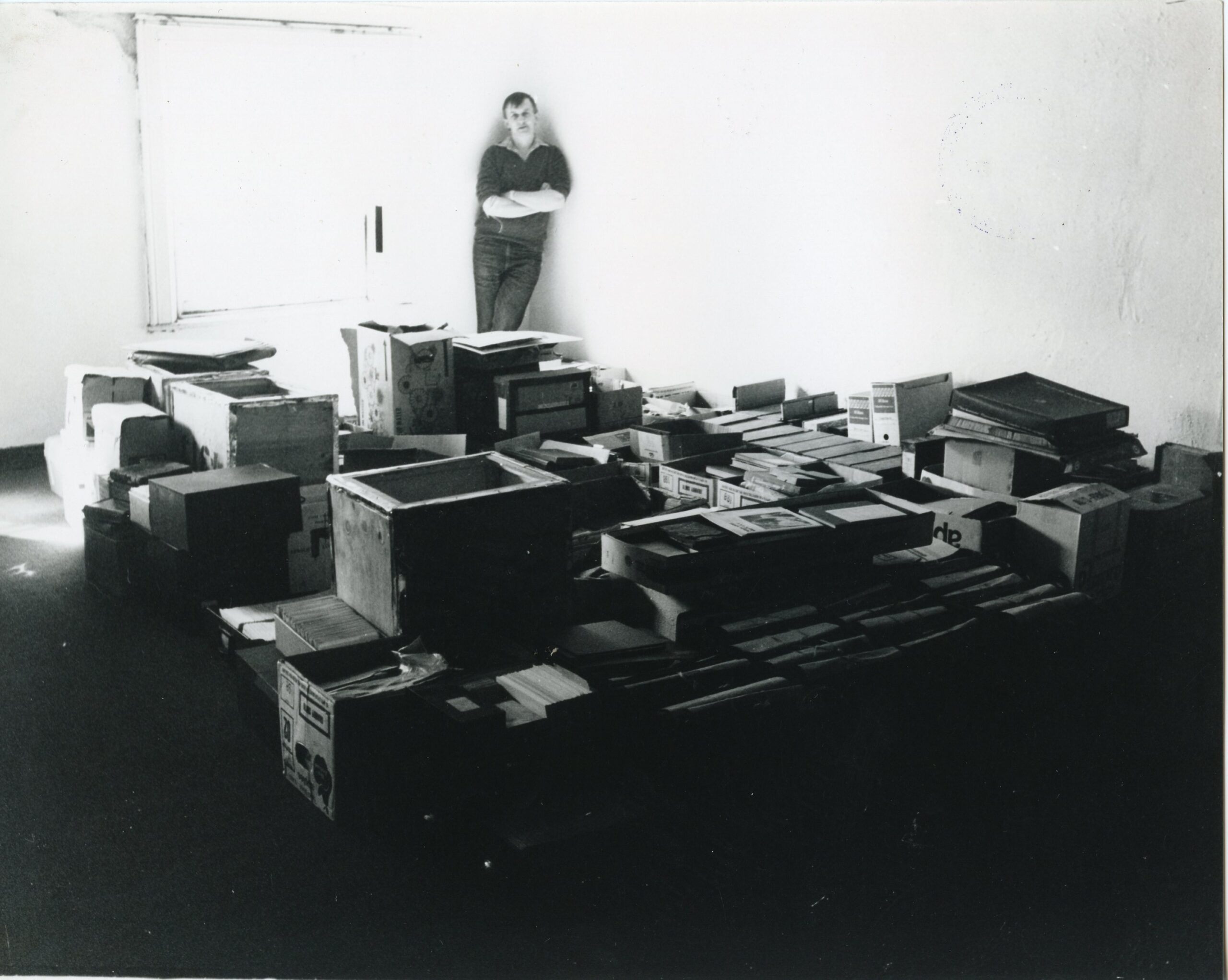
After Breandán’s death in November 1985, friends and colleagues undertook the completion of projects which he had begun (or had only contemplated), and these must also go to his credit. Ceol was completed in a double number in 1986 by the present writer, who also jointly edited with Séamus de Barra in 1989 Ceol agus Rince na hÉireann, Breandán’s Irish-language version of his 1971 volume; Terry Moylan edited the music of the Kerry accordion player Johnny O’Leary in 1994, and produced with Seán Potts and Liam McNulty a volume of Breandán’s collected writings in 1996; Jackie Small edited two further volumes of Ceol Rince na hÉireann in 1996 and 1999; Hugh Shields edited a volume of the music manuscripts of the Kerry clergyman and musician James Goodman in 1998, and a second volume with Lisa Shields in 2013; Pat Mitchell edited the dance music of Dublin uilleann piper Seamus Ennis in 2007; in the Breathnach vein, Seán Donnelly has continued from 1985 to date to explore historical uilleann piping, harping and other Irish music sources, and publish the results in a series of seminal articles; since 1987 staff members of ITMA have processed and given access to Breandán’s collection there; they later acquired a collection of over 7,000 of his music transcriptions from An Gúm. And this is not to record publications by all of the above (and by others in print and on record, radio, and television) which are in the Breathnach mould and of which he would have thoroughly approved.
See further the complete run of Ceol: A Journal of Irish Music on ITMA’s website, and journalofmusic.com
Nicholas Carolan is Director Emeritus of ITMA, of which he was founder-director 1987–2015