

The Irish Traditional Music Archive (ITMA) is committed to providing free, universal access to the rich cultural tradition of Irish music, song and dance. If you’re able, we’d love for you to consider a donation. Any level of support will help us preserve and grow this tradition for future generations.
by Nicholas Carolan
To mark the 100th anniversary of RTÉ Radio, the national broadcaster established as 2RN in 1926, script copies are presented here of The Irish Phonograph, one of its very many traditional music programmes. This ran in two series on RTÉ Radio 1 from November 1983 to April 1984 and from January to September 1986. They are working scripts, giving insights into the actual putting together of radio programmes under pressure in studio and also providing much biographical and discographical information on Irish traditional music which is not to be found elsewhere. The Irish Phonograph would lead indirectly to the establishment of the Irish Traditional Music Archive in 1987.
The Irish Phonograph was the brainchild of Harry Bradshaw, an RTÉ radio producer and audio restoration specialist who was then responsible for such traditional music series as The Long Note and An Droichead Beo. He approached Nicholas Carolan with an immediately accepted proposal for a radio series on the early commercial recordings of Irish music, a series which would be both historical and contemporary and would have an emphasis on traditional music (both had earlier worked on a Long Note special on the recordings). Thousands of these recordings had been issued from the 1890s on cylinder and 78rpm disc, had featured Irish singers and musicians recorded in Britain, emigrant performers recorded in the United States and, from the late 1920s, home-grown performers recorded in Ireland. But they had gone unheard for years as the machines on which they played had become an obsolete technology in the 1950s. Carolan had been researching the recordings since the late 1970s, long before the computerisation and digitisation of sources. He had published on them, and had been awarded an Arts Council bursary in 1981 to explore and copy materials from record company archives and libraries in England and another bursary in 1982 to visit similar institutions in the United States.
For the The Irish Phonograph Bradshaw looked after research, sound and production, and Carolan research, scripting and presentation. The combination of ‘new’ music, documentary interviews and historical contextualisation proved popular, and resulted in a repeated run of 61 half-hour original programmes on Radio 1 (with a series sold to the Australian Broadcasting Commission). The programmes were interactive: listeners wrote in with information and offered recordings from their collections, far more than could be used in the broadcasting window. Musicians and singers learned from the recordings played and found their understandings of the tradition enriched by the new emphasis the series put on establishing the dating and siting of recordings (something which is now usual in Irish traditional music programmes).
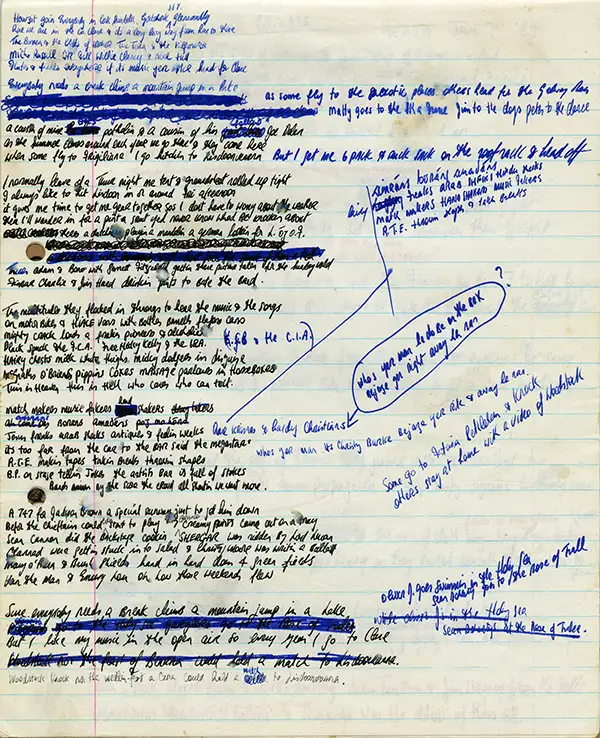
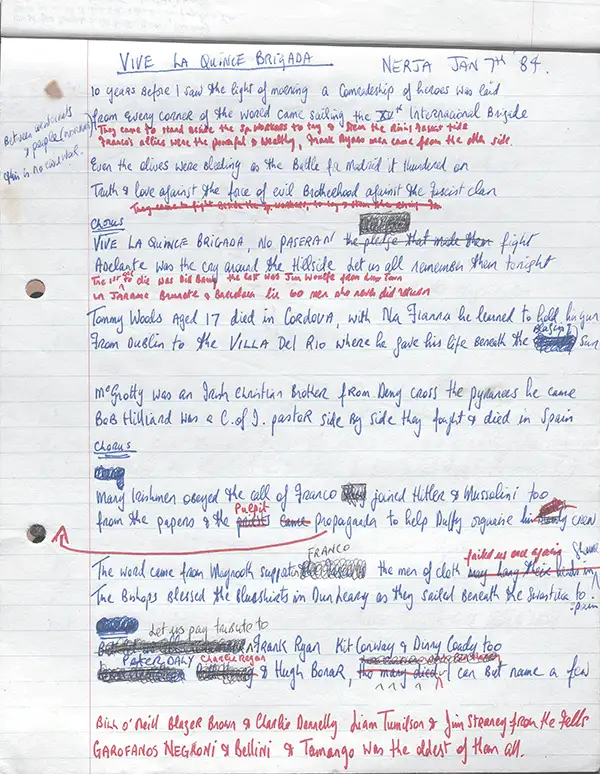
The scripts in their present state result from how the programmes were assembled. Both broadcasters agreed in advance what recordings of singers and musicians would be featured in the following week’s programme. Bradshaw assembled and timed the recordings and Carolan handwrote an approximately timed script which would be somewhat longer than required. On the studio recording day, the total timing of the recordings was immutable and the script would have to be changed to accommodate it. The result is that words, lines and even paragraphs were dropped from the scripts, and sometimes planned recordings were dropped or bumped forward. Scripts are peppered therefore with on-the-spot second thoughts, tweaks, rephrasings and rewritings, and crossings-out, but the resulting programmes ran impeccably as far as listeners were concerned. This is a process that will be familiar to generations of radio broadcasters; scripts usually end up in the studio waste-paper bin.
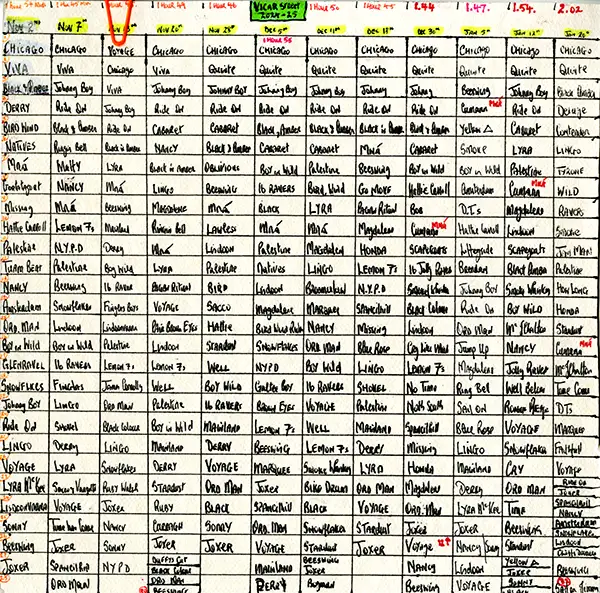
The scripts here reflect the broadcasting process, and also preserve much information that could not be included in the finished programmes. To help readers navigate them, the main performers in each programme are listed in the headings to each script (accompanying musicians, when known, are named in the actual scripts). Some late scripts were written on RTÉ radio schedule sheets; these have been included to provide contemporary radio context. The 61 finished programmes are held in the RTÉ radio archive in RTÉ, Donnybrook, Dublin 4. They are not available in ITMA, which was not in existence at the time, but many listeners recorded them from live transmission and hold them privately.
Nicholas Carolan: text; Maeve Gebruers: digitisation & design, 13 November 2026